Carbohydrate-Coated Lysophospholipids Improve Milk and Component Yields in Mid-Lactation Dairy Cows
2026-07-10
Carbohydrate-Coated Lysophospholipids Improve Milk and Component Yields in Mid-Lactation Dairy Cows
Michigan State University researchers validate the production benefits of optimal LPL supplementation.
Staff Report
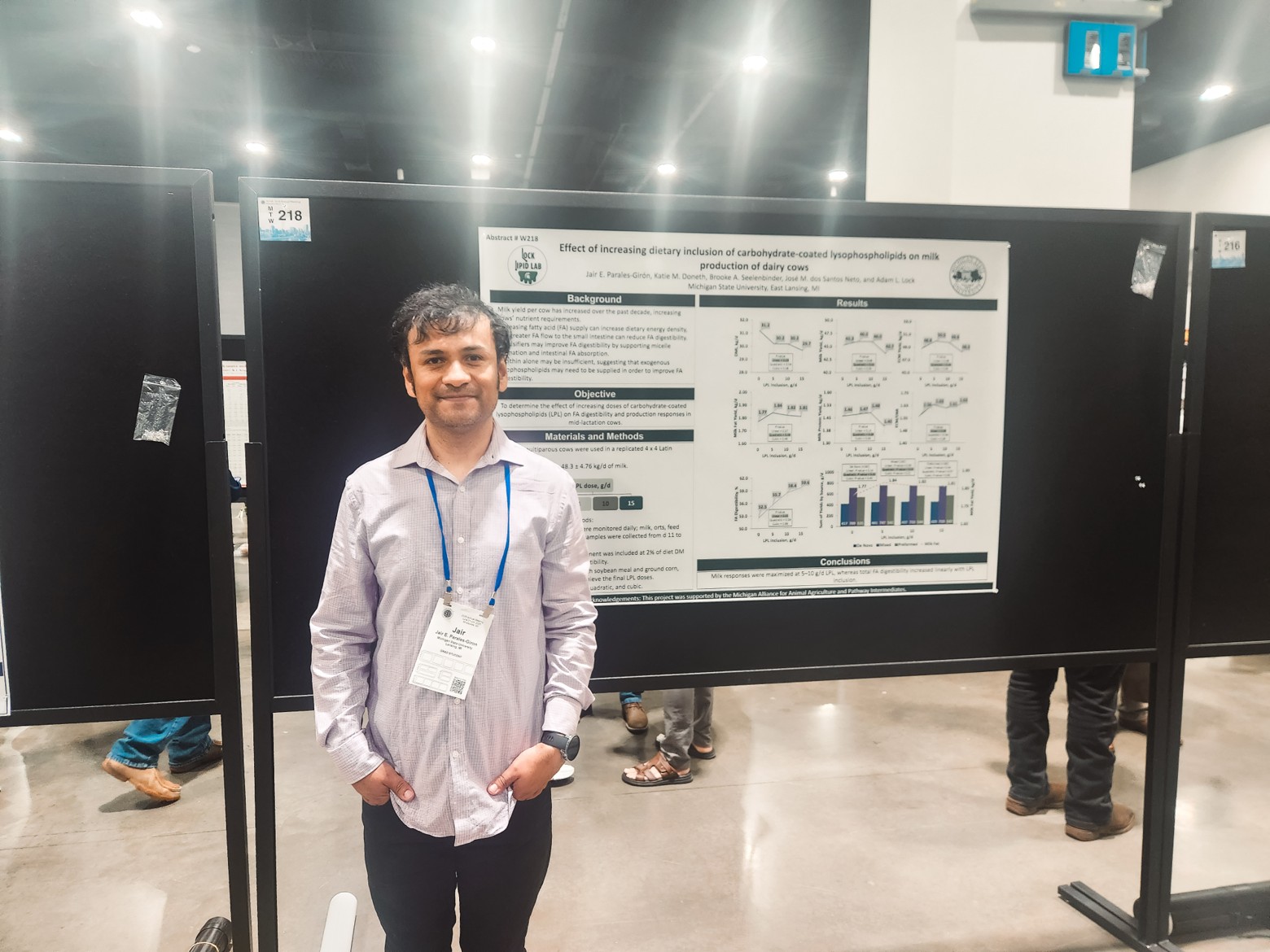
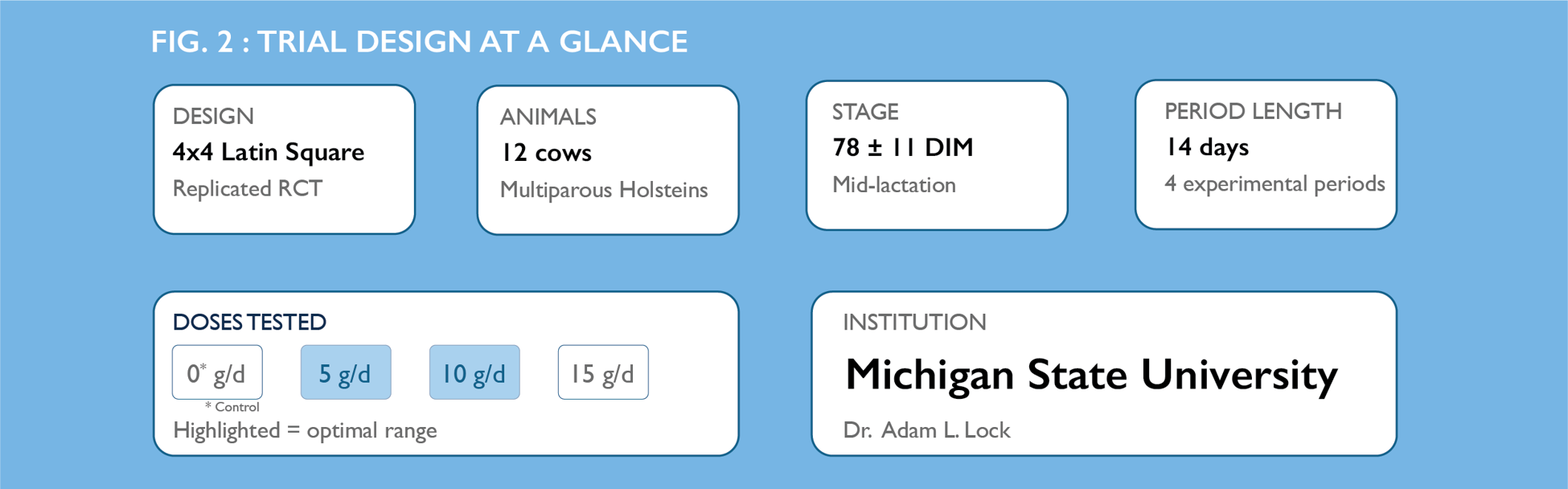
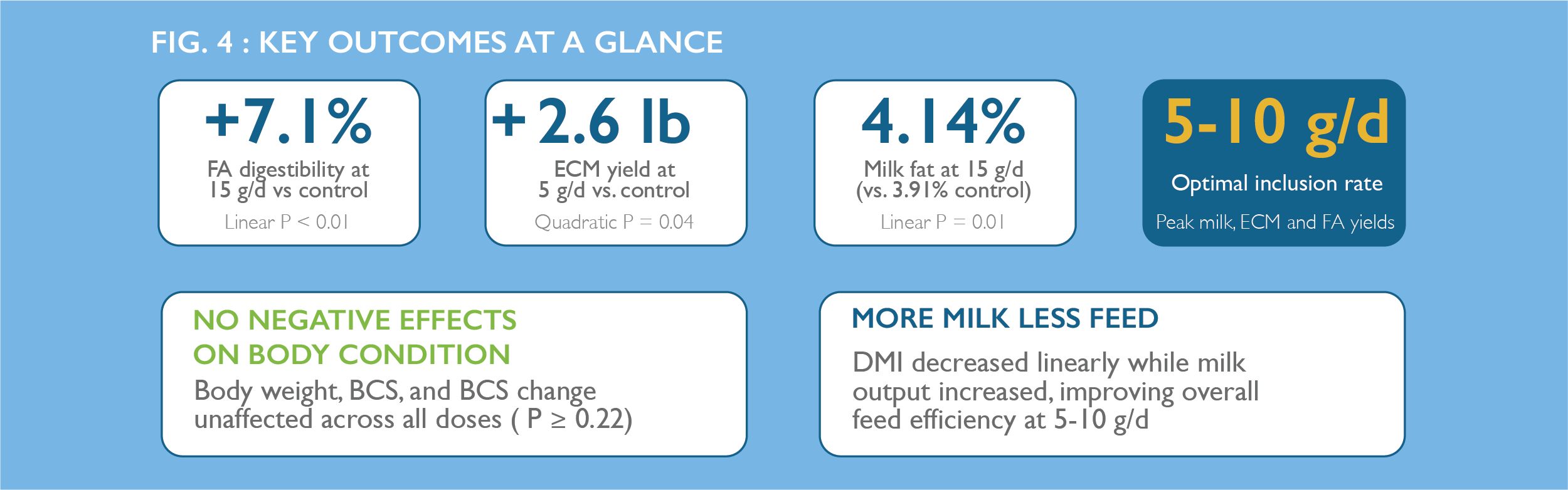
Maximizing nutrient utilization and milk production is a constant priority for dairy producers. While increasing dietary fatty acid (FA) supply is an effective way to boost energy density, a high flow of FA to the small intestine can frequently depress overall FA digestibility.
Recognizing this metabolic challenge, a research team from Michigan State University, including Jair E. Parales-Girón and Dr. Adam L. Lock, evaluated the impact of supplementing carbohydrate-coated lysophospholipids (LPL) in dairy rations. They hypothesized that exogenous LPL, acting as an effective emulsifier and nutrient absorption accelerator, would enhance micro-micelle formation and intestinal absorption, thereby improving FA digestibility and production responses in mid-lactation cows.
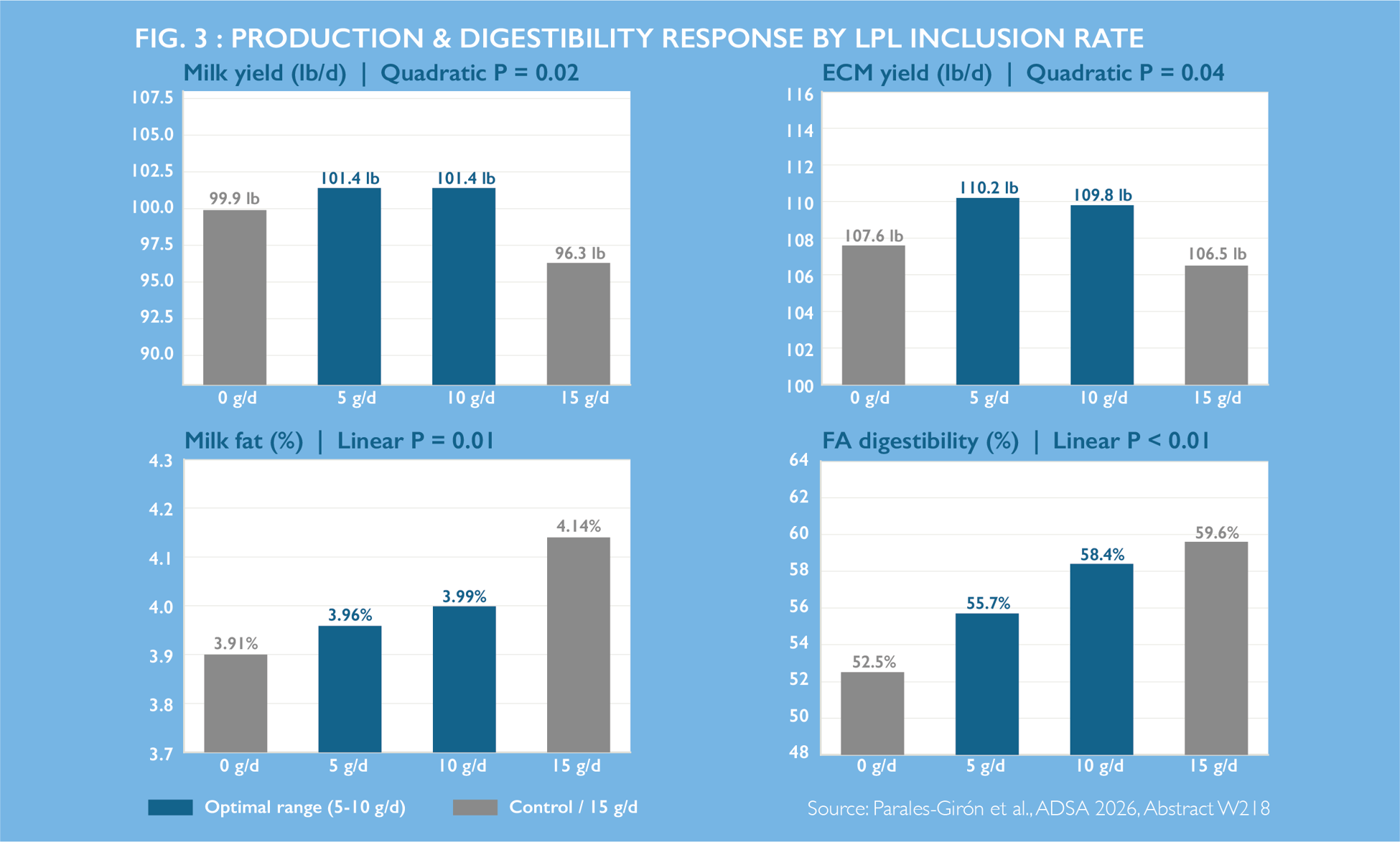
"Lecithin alone may be insufficient to maximize lipid utilization," the researchers reported. "Consequently, we expected that strategic LPL inclusion would optimize nutrient absorption and directly translate into better milk and component yields."
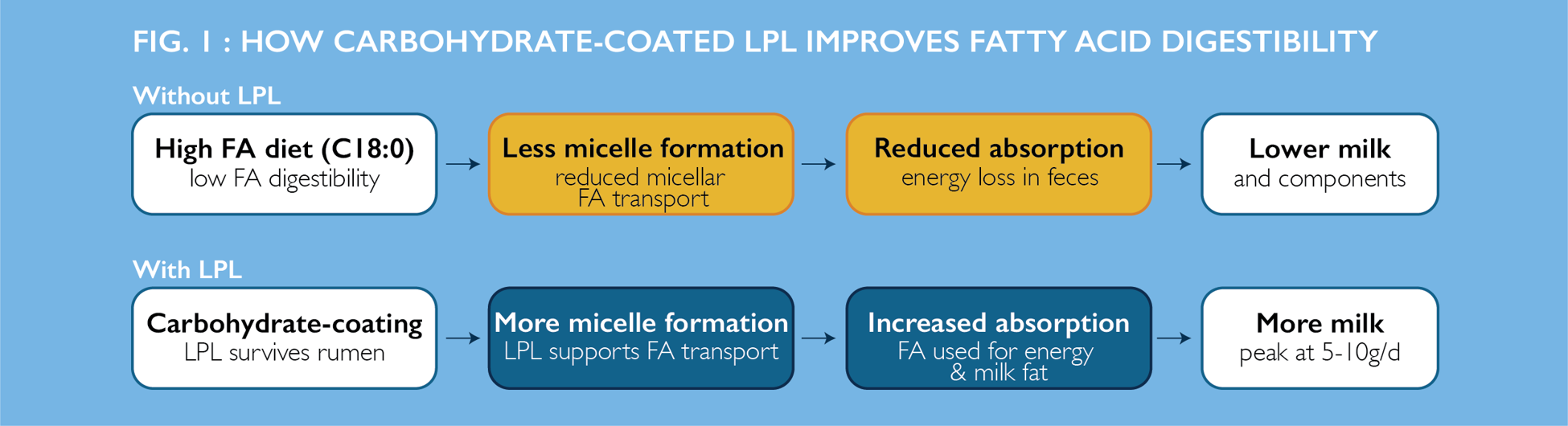
Study design
PRIVACY POLICY
Thank you for visiting EASY BIO's website. The contents of the site can be used for private purposes, and the 'link' and 'data' can be directly stored in PCs. However, the site is bound under certain legal restrictions and prohibitions. The restrictions and prohibitions include the following recognitions:
1. The website is an exclusive information property of EASY BIO.
Properties related to the EASY BIO website (www.easybio.co.kr) include copyrights, trademarks, technology information, pictures, images, sound bites, link, and source codes (mentioned hereafter as 'website service'), and EASY BIO possesses exclusive rights to the website service. All information is provided for the benefit and convenience of EASY BIO's customers.
However, it has to be clarified that EASY BIO is not granting the commercial using rights to the customers. Customers cannot use the website service for any purposes other than for private use.
2. EASY BIO will not be liable for any direct, indirect, incidental, special, or extended damages caused by the website service.
EASY BIO does not deem credible all materials contained in its website. Therefore, unless a special notice is given, EASY BIO's website service should not be used as supplementary information in the decision making process. Apart from the information and service it directly provides in the site, EASY BIO does not guarantee the accuracy, perfection or reliability of additional materials contained in its website. Therefore, we strongly discourage our customers from relying exclusively on information we do not guarantee.
We especially ask you to refrain from using the website for unwarranted sales, trade, and purchase transactions related to the benefits of corporations or individuals. EASY BIO will not be liable for any direct, indirect, incidental, special, or extended damages that results from the use of the information and materials contained in the website.
3. EASY BIO's website service should not be used as materials for securities transactions.
The information and materials contained in the website are not suitable to satisfy the demands and requirements of securities institutions. Therefore, the materials should not be used to make investment decisions. EASY BIO does not guarantee the reliability and credibility of materials in its website as sources for commercial and financial information.
4. The links in EASY BIO's website have no direct connection with EASY BIO
EASY BIO is providing various links in its website that are based on the individual needs of its users. Even though the links are provided for the information gathering and convenience of the users, EASY BIO is not legally responsible for any of the link sites and does not guarantee their credibility. The use of the sites is up to the discretion of each individual.
EASY BIO.


- Company
- EASY BIO, Inc.
- Address
- 4th floor, 310, Gangnam-daero, Gangnam-gu, Seoul, 06253, South Korea
ⓒ EASY BIO, Inc. All Rights Reserved.